The Netherlands looks to the political center
October 30, 2025
The Dutch electorate is divided. Rob Jetten from D66 and Geert Wilders from the PVV are competing for the position of largest party. In this analysis from the Omnicom Public Affairs team, we provide the most relevant insights from the election results.
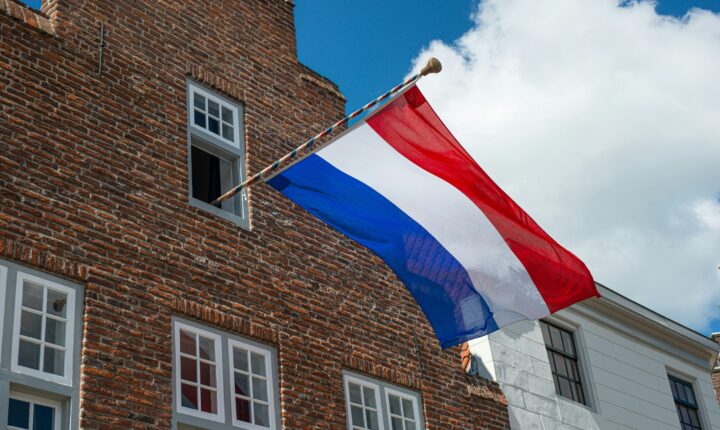
The Dutch electorate is divided. Rob Jetten from D66 and Geert Wilders from the PVV are competing for the position of largest party. With each at 26 seats, and postal votes, votes from Amsterdam, and the BES islands still to be counted, it is an unprecedentedly close race. At the same time, the time seems ripe for a centrist cabinet. The outcome reflects the voters’ desire to solve longstanding problems.
There is a high chance that the Netherlands is heading towards a government made up solely of centrist parties. That is the most likely outcome of the House of Representatives elections held on October 29. In this analysis from the Omnicom Public Affairs team, we provide the most relevant insights from the election results.
‘Torentje’ for Jetten and Timmermans’ departure
Against all expectations, D66 could turn out to be the largest party.
Rob Jetten of D66 can look back on a successful campaign. Flown in at the last moment to replace Geert Wilders at the first party leaders’ debate, he was able to present his positions in a fresh way. He positioned himself against the populism of the PVV and, on the other hand, against Frans Timmermans of GL/PvdA. He also profiled himself as an ‘anti-populist’, emphasizing hope and a future-oriented vision. This campaign strategy paid off with a gain of 17 seats. As the largest centrist party, D66 now seems to be in the lead to initiate coalition formation.
The biggest player on the left, GL-PvdA, did not quite make it. In fact, the new combination of greens and social democrats lost seats: the two parties together previously had 25 seats, ending up with 20 after the elections. With this number of seats, the party led by former EU Commissioner Frans Timmermans is in fourth place. Party leader Timmermans announced his departure. The loss of seats is a sensitive blow, especially considering that the political combination now has fewer seats than before merging (also compared to the election potential of both parties).
Wilders and BBB sidelined
After the previous government adventure of the PVV, it was clear that no centrist party would risk joining Wilders in government again. At the same time, we see that voters, despite a loss of 11 seats, are not yet done with the PVV. Wilders campaigned from the familiar opposition role — not an approach that allows compromise. We therefore expect to see the familiar Wilders in the opposition benches for the coming years. The BBB also lost seats, from 7 to 4. The party appears to be held accountable for the performance of the previous cabinet.
Bontenbal just misses out
The CDA fought hard but just missed out in the battle for second (and thus first) place. Bontenbal gained a lot of goodwill in the country with his calm, solid style and emphasis on decent politics. The CDA was handsomely rewarded for this, rising from 5 to 18 seats. The party is now an indispensable part of any possible new coalition. The challenge will be to bring the promised ‘decent politics’ into practice in a new cabinet.
Mixed feelings for VVD
The liberal VVD lost a little ground, dropping from 24 to 22 seats. Dilan Yesilgöz, previously considered a potential new prime minister, was judged harshly by voters. Voters and party members were annoyed by her tone and actions, although she managed to repair some of the damage in the last week of the campaign. At the same time, the VVD remains a strong brand, so despite all the criticism they only lost 2 seats. It is expected that Yesilgöz will remain as leader.
One-Hit Wonders and Comeback Kids
Hello, goodbye: New Social Contract (NSC), the former party of Pieter Omtzigt, has left parliament as quickly as it entered. Participation in the cabinet, internal issues, the departure of former leader Omtzigt, and a series of weak party leaders such as Van Vroonhoven and Van Hijum spelled the end of the party: of the 20 seats won by the brand-new party in 2023, not a single seat remains after the October 29 elections.
JA21 is the comeback kid of the night. The FVD offshoot made a significant seat gain, from 1 to 9 seats. FVD itself also gained 4 seats. Both parties are attracting voters from the PVV and VVD. They will voice right-wing opinions. Also back from the past — the 50PLUS party for seniors, which won 2 seats.
Cooperation of centrist parties
It now looks like D66 and GL-PvdA, as the two largest parties, will form the engine of the new cabinet. Together with the CDA and VVD, this gives a comfortable parliamentary majority of 86 seats. It is expected that the VVD will resist joining such a coalition (more on this later). There are also members within the CDA who have reservations about this composition.
A new coalition in this composition cannot count on a majority in the Senate (35 out of 75 seats). This could form an interesting challenge for the new coalition. The BBB, with its 13 seats in the Senate, is the second-largest party and will be in a strong negotiating position when it comes to passing legislation, as the Senate has the final say. It is worth noting that most cabinets under former Prime Minister Rutte also did not have a Senate majority, and this did not prevent legislation from being enacted.
Centrist cabinet: possible policies
The most likely option is a cabinet of D66, GL-PvdA, CDA, and VVD. This centrist cabinet will aim to be ambitious on climate policy. The principle of ‘the polluter pays’ is likely to be leading. This will mainly have consequences for businesses and farmers with high nitrogen and/or CO₂ emissions. Parties such as CDA and VVD will resist on some topics, but the trend will be clear. We also expect higher tax pressure for all companies, with large companies bearing the heaviest burden both in absolute and relative terms. Housing construction, social security, and poverty reduction will receive much attention, and more money will go to defense. At the same time, it is still unclear how this coalition will address issues such as asylum migration and labor migration. There is hope and expectation that this new cabinet will serve a full four-year term, with stable and decent governance—the CDA has explicitly committed itself to this.
Center-right cabinet
If a cabinet of centrist parties is not possible, it will be a challenge to explore other options. A center-right cabinet is not an obvious choice for GL-PvdA, and it is unlikely that they will participate. Without GL-PvdA, at least five parties would be needed to achieve a majority, including the progressive D66. This does not seem a realistic scenario. In this case, there would likely be renewed pressure to also talk to the PVV for a right-wing majority. If a center-right cabinet comes to pass, we expect stricter migration policy and limited attention to climate policy. A center-right cabinet would also allocate a lot of money to defense. Otherwise, it would pursue a policy similar to the current government.
Long coalition formation expected
Parties promise a short coalition formation—hoping for a cabinet around Christmas or early in the new year. However, this seems unlikely. The Netherlands has a tradition of long coalition processes. Additionally, votes in Amsterdam still have to be counted, and postal votes need to be registered. It is possible that the first steps (the exploratory phase) will not begin until early next week.
There will first be an exploratory phase, in which a scout appointed by the House of Representatives will map out the possibilities for a new coalition. This exploratory phase could take a long time, given the (small) differences in the number of seats between the parties. We cannot rule out that the first attempt will be to form a right-wing minority cabinet led by Wilders. This is unlikely to succeed but will delay the exploratory process. Parliament will then appoint one or more informateurs, who will lead the negotiations between the intended coalition partners.
Despite the stated desire for a quick formation, we expect negotiations to take quite some time, partly because the VVD will drive a hard bargain. There are hardly any other options due to the lack of seats. If the option of a center-right cabinet has to be explored, coalition formation will take even more time. All in all, we can assume that a new cabinet will not take office until the first or second quarter of 2026.